
5 Situations Where Wearing a Brace During Sport Is Clinically Justified (And Won’t Slow You Down)
There’s a stubborn belief in sporting circles that wearing a brace means you’re compromising your performance. You’ll hear it in changing rooms and on training grounds: “Just strengthen the muscle” or “A brace will make you dependent on it.” These ideas sound reasonable on the surface, but the clinical evidence tells a different story.
Research published in journals like the Journal of Athletic Training consistently shows that well-fitted functional braces do not meaningfully reduce athletic output in most sport-specific scenarios. In fact, for several common conditions and recovery stages, bracing during activity is not just acceptable but actively recommended. The key is knowing which situations genuinely call for it.
Here are five specific scenarios where wearing a brace while competing or training is both clinically justified and performance-compatible.
1. Returning to Sport After a Lateral Ankle Sprain
Ankle sprains are the most common acute injury in sport, accounting for roughly 25% of all musculoskeletal injuries across team and individual disciplines. The problem isn’t just the initial ligament tear. It’s what comes after.
Following a Grade I or Grade II lateral ankle sprain, proprioceptive deficits persist long after the pain subsides. The ankle’s ability to sense position and load changes is genuinely compromised, often for weeks or months. Athletes who return to cutting, jumping, or uneven terrain too early without external support face a re-sprain risk that research puts somewhere between 40% and 70%.
A functional ankle brace, particularly one designed for sport rather than immobilisation, addresses this directly. It doesn’t restrict the full range of natural movement required for athletic performance. Instead, it provides a mechanical cue that compensates for reduced proprioception while the joint’s sensory systems recover.
For athletes returning to court or field sports, the Push Sports Ankle Brace is worth considering here. It’s slim enough to fit inside athletic footwear and provides the lateral stability needed during the vulnerable return-to-sport window, without the bulk of a rigid ankle support.
2. Managing Patellar Tracking Issues During Trail Running
Trail running places asymmetric, repetitive loads on the knee that road running simply doesn’t replicate. Uneven ground, constant elevation changes, and long descent sections all increase the compressive and shear forces acting on the patellofemoral joint. For runners with patellar tracking dysfunction or early-stage patellofemoral pain syndrome (PFPS), this can become a serious barrier to training.
The conventional advice is to rest and strengthen the VMO (vastus medialis oblique). That’s genuinely useful, but it takes time, and it doesn’t help the runner who has a race in six weeks and can’t afford to lose their base fitness.
A knee brace with a patellar stabilisation feature helps guide the kneecap more consistently through its tracking groove during loaded movement. This reduces the friction and irritation that drives PFPS symptoms without locking the joint into a fixed position. Studies have shown patellofemoral bracing can reduce pain scores during activity by a clinically meaningful margin, enough to allow continued low-to-moderate training while rehabilitation progresses in parallel.
The Push Med Knee Brace offers adjustable patellar support with a lightweight design that works well under trail running tights, giving the joint the guidance it needs without creating pressure hotspots on longer efforts.
3. Playing Racket Sports With Tennis Elbow
Lateral epicondylitis, better known as tennis elbow, affects somewhere between 1% and 3% of the general population and is dramatically more prevalent in racket sport players. The repetitive wrist extension and forearm rotation involved in groundstrokes, serves, and overhead shots places constant eccentric load on the extensor tendons at the lateral epicondyle.
The frustrating reality for tennis and padel players is that complete rest rarely cures the condition. Tendinopathies often respond better to progressive loading than prolonged offloading. That creates a clinical dilemma: how do you continue the activity that’s necessary for recovery without aggravating the tendon further?
A counterforce elbow brace provides a partial answer. By applying targeted compression just distal to the epicondyle, it redistributes stress along the forearm extensors and reduces the peak load on the injured tendon insertion during dynamic movement. This allows players to continue modified training, work on technique adjustments, and maintain match sharpness while the tendon heals.
The Push Med Elbow Brace is specifically designed for conditions like lateral epicondylitis, with anatomically positioned support that applies force in the right location without restricting elbow flexion or rotation during play.
4. Competing With Thumb CMC Osteoarthritis in Grip-Dominant Sports
The carpometacarpal (CMC) joint at the base of the thumb is among the most commonly affected by osteoarthritis, particularly in adults over 40. For athletes in sports like climbing, rowing, gymnastics, or combat sports, where grip strength is a fundamental performance variable, CMC arthritis creates a painful constraint that’s difficult to work around.
Surgical intervention is an option at advanced stages, but for mild to moderate CMC osteoarthritis, a well-fitted thumb brace can extend an athlete’s active career meaningfully. The goal isn’t to mask pain so the joint degenerates faster. It’s to offload the CMC joint enough to reduce synovial irritation, allowing grip-intensive training to continue within a manageable pain threshold.
The Push MetaGrip Thumb CMC Brace is widely regarded as a clinical gold standard for this specific condition. Its anatomical design stabilises the CMC joint while preserving enough finger and thumb mobility for grip-dependent tasks. It’s a product that BraceLab stocks alongside a broader range of options for athletes managing chronic joint conditions, and for good reason. The level of specificity in its design is genuinely difficult to find in a generic pharmacy brace.
5. Preventing Wrist Reinjury During Strength and Overhead Sports
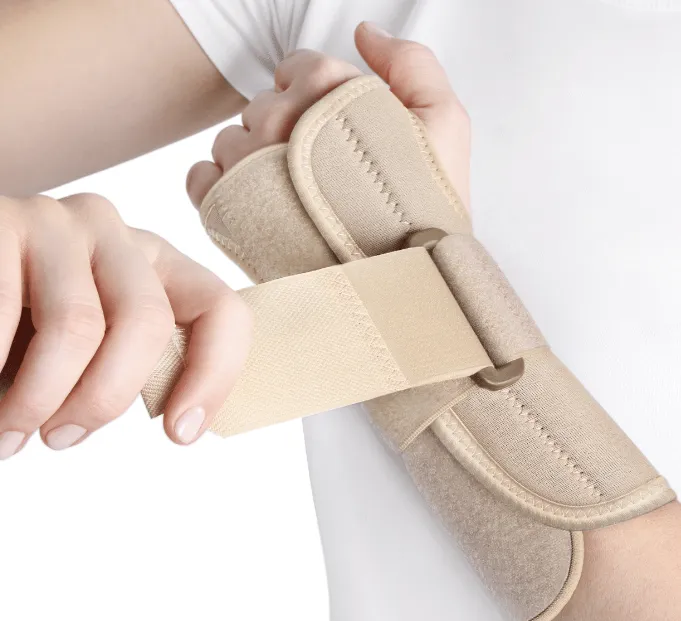
Wrist sprains and TFCC (triangular fibrocartilage complex) injuries are common in weightlifters, gymnasts, and overhead athletes like volleyball players and swimmers. Once the initial injury has healed to a functional level, the wrist often remains vulnerable under high-load or end-range positions, particularly during pressing, catching, or overhead reaching movements.
The dilemma many athletes face is choosing between modified training that avoids wrist loading entirely (which limits sport-specific work significantly) or returning fully and risking a setback. A wrist brace bridges that gap during the sub-acute and return-to-sport phases.
A good sport-oriented wrist brace limits extreme ranges of motion, particularly the end-range extension that most commonly causes reinjury, while keeping the joint mobile enough for functional athletic movement. It’s not a permanent solution but it’s a practical and clinically sound one during the period when tissue remodelling is still incomplete.
For athletes browsing options, looking at the best selling wrist and sports braces available in this category is a useful starting point for matching the right level of support to the specific activity and injury stage.
Key Takeaways
- Bracing during sport is clinically justified when proprioceptive deficits, joint instability, or ongoing tissue loading create a genuine reinjury risk.
- Functional braces used in sport are designed to allow natural movement ranges, not restrict them. The distinction between immobilisation and functional support matters.
- For conditions like tennis elbow and CMC arthritis, bracing allows continued activity and progressive loading, which is often more therapeutic than complete rest.
- Product specificity matters. A brace designed for the exact joint and condition will outperform a generic support on both comfort and clinical effectiveness.
- Bracing is most effective when combined with rehabilitation, not used as a standalone fix or an indefinite substitute for addressing the underlying weakness.
Frequently Asked Questions
Will wearing a brace long-term make the joint weaker? This concern is valid for immobilising braces worn without any rehabilitation programme. Functional sport braces, which allow movement while providing stability, do not cause muscular atrophy when used appropriately. They should always be combined with targeted strengthening work to address the underlying cause of instability.
How do I know if I need a brace or just more rest? A clinical assessment from a physiotherapist or sports medicine specialist is the most reliable way to answer this. As a general guide, if pain is persistent at rest or significantly worsening with activity, rest and assessment come first. If you’re in a recovery phase with residual instability or mild discomfort under load, functional bracing during activity is often appropriate.
Can I wear a sport brace under athletic clothing or footwear? Most sport-oriented braces are designed with this in mind. Slim-profile ankle braces are made to fit inside footwear, and knee and elbow braces are generally low-profile enough for compression garments. Thumb and wrist braces may need some adjustment depending on glove requirements in certain sports.
Does bracing affect proprioception negatively over time? Short-term bracing during the recovery phase does not appear to impair long-term proprioceptive development, particularly when rehabilitation exercises targeting joint position sense are included. Some research even suggests that brace-induced tactile feedback may temporarily enhance proprioceptive awareness in injured joints.
How do I choose the right brace for my sport and condition? The two most important factors are the specific joint and the specific condition, not the sport category alone. A climber with CMC arthritis needs something very different from a climber with a wrist sprain. Consulting a physiotherapist or occupational therapist for guidance, and then using a specialist supplier with product-specific information, gives the best outcome.
Conclusion
The idea that braces and athletic performance are fundamentally incompatible is oversimplified. In the right clinical context, at the right recovery stage, with the right product, bracing during sport is not a compromise. It’s a considered decision that allows athletes to train, compete, and recover without forcing a binary choice between activity and healing.
Understanding which situations genuinely call for support, and which products are designed for those situations, is where the real value lies. The next time joint pain or instability is pushing you toward the sidelines, it’s worth asking whether the answer is actually a few weeks off or simply the right brace.


